For this 36th edition of “Retail Tech Thursdays, ” the North was once again in the spotlight, for the fourth consecutive year. As in previous years, no specific theme had been set in advance: the primary goal was to highlight the region’s retail and tech players, their initiatives, and their insights.
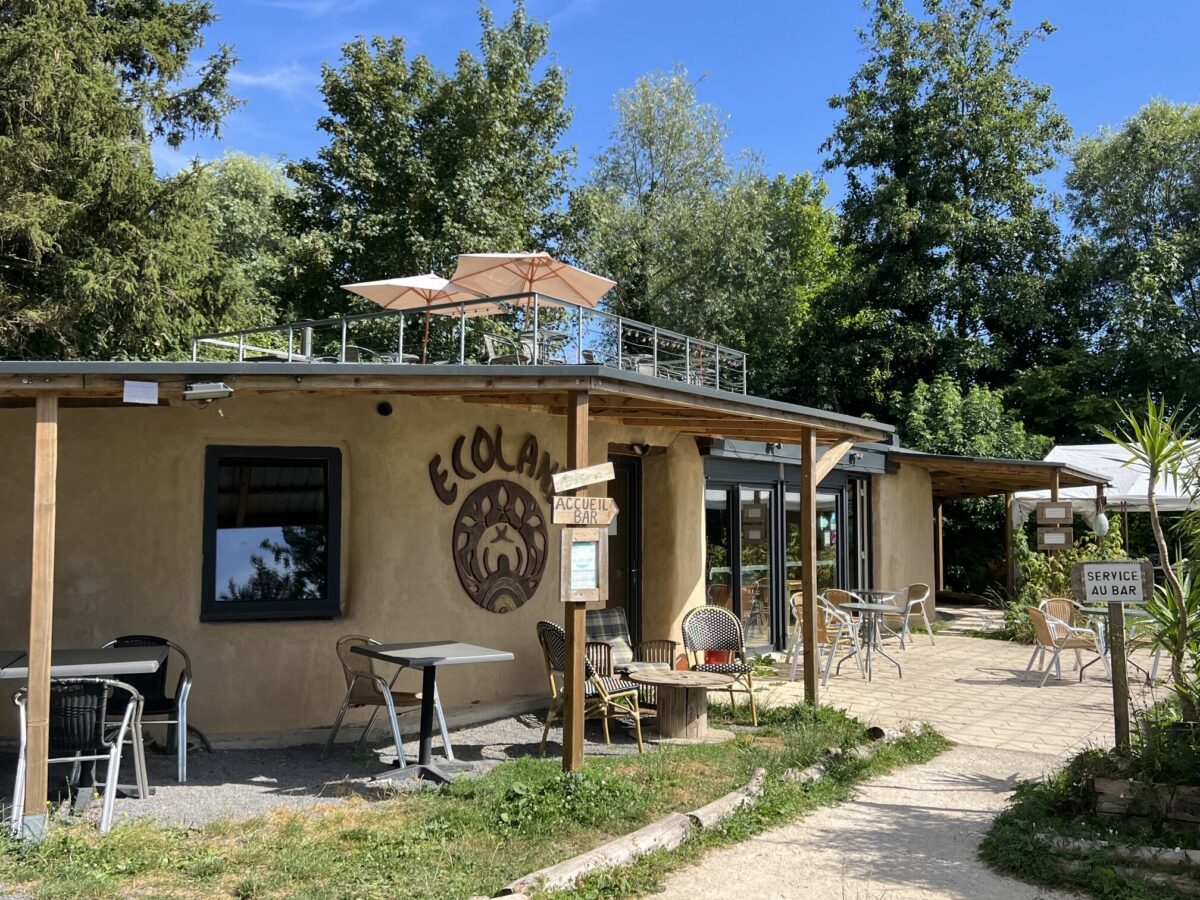
This event took place at Kiabi Village under ideal conditions, thanks to beautiful spring weather. Participants were able to enjoy the terrace before the discussions began and continue their conversations and networking after the event in a particularly friendly atmosphere.

The team atOptimal Ways was on site to gain a deeper understanding of the current challenges facing retail and e-commerce, and is pleased to share with you this report on the event—which proved particularly insightful—as well as the NotebookLLM summary shown just above.

🎤 Patrick Stassi (Kiabi): “We’re moving from fashion to lifestyle”
Mike Hadjadj kicked off the traditional “CEO Vision” segment with a special guest: Patrick Stassi, CEO of Kiabi. It was a particularly insightful presentation that provided a better understanding of how the French apparel leader is transforming itself to remain competitive in a rapidly changing market, amid trends such as globalization, ESG, omnichannel retailing, and artificial intelligence.
🌍 Kiabi, a clothing industry leader with more clout than you might think
Patrick Stassi began by pointing out a fact that is still little known to the general public: despite having less media visibility than some international brands, Kiabi is now the number one apparel retailer in France by volume. As he humorously pointed out, “People know Zara and H&M, especially in Paris, but even though we have a limited presence in Paris, we’re number one in France.”
The group is also continuing its strong international expansion, with a presence in nearly 39 countries, following recent store openings in Switzerland and Argentina. Kiabi now has approximately 700 stores worldwide, divided almost equally between France and other countries.
This growth is supported by a large-scale organization:
- 10,000 employees,
- and nearly 20,000 people, including franchisees.
One of Kiabi’s greatest strengths remains its family-oriented focus, particularly in the baby and children’s segments. Patrick Stassi points out that “in France, there are 600,000 births per year” and that Kiabi opens “400,000 baby savings accounts per year .” This loyalty program aimed at new parents illustrates the special place the brand holds in the lives of French families.
The executive explains that this relationship is established very early on: customers often discover Kiabi while they are pregnant, then dress their children for years, before returning later when they become parents themselves.
Even with a market share of about 6 percent, the textile market remains extremely fragmented. Patrick Stassi points out that “it’s an extremely fragmented market,” very different from other sectors such as sports or home improvement, where market leaders can exceed a 30 percent market share.

🏡 A long-term vision driven by the family shareholders
For Patrick Stassi, one of Kiabi’s main strengths lies in its family ownership, which allows the group to maintain a sustainable and consistent vision.
“We’re talking about a 10-year vision. Our shareholders are talking about 20, 30, and 40 years,” he explains. This approach gives the company the ability to invest for the long term:
- in its teams,
- in innovation,
- in the customer experience,
- but also in fundamental changes.
For 48 years, Kiabi has upheld the same promise: to offer “quality fashion at affordable prices.” Patrick Stassi emphasizes that the brand has never sought to fundamentally change its DNA: “At no point did we ever say to ourselves, ‘We’re going to raise our prices or change our image.’”
This focus on accessibility is also reflected in the product lineup:
- plus-size collections up to size 6XL,
- clothing designed for people with disabilities,
- postoperative products,
- or even clothes that are easier to put on.
🌱 ESG Transformation Is Now Central
Environmental issues played a major role in the discussions. Patrick Stassi acknowledges that climate issues were less prominent in the textile industry several decades ago, but explains that Kiabi has significantly accelerated its transformation in recent years.
The goal is clear: “We don’t want to be a fast-fashion brand at the expense of the planet.”
Today, ESG indicators are tracked on the same level as economic indicators, including in the variable compensation of management teams. In particular, the group is working on:
- carbon footprint,
- water consumption,
- and land use.
Patrick Stassi highlights a key point in the textile industry: “75% of the carbon footprint and 90% of the water footprint occur during the manufacturing process.”
Conversely, transportation accounts for a relatively small portion of the environmental impact, thanks to logistics that rely primarily on maritime transport.
Kiabi currently works with approximately 120 partner suppliers, many of whom it has been working with for nearly ten years, as part of a long-term cooperative approach focused on:
- green energy,
- traceability,
- social issues,
- and reducing the environmental impact.
“We work hand in hand with them,” says Patrick Stassi.

♻️ Secondhand and Rentals: Try It Out, Learn, and Make Adjustments
Kiabi is one of the first retailers to have invested heavily in the secondhand market. For Patrick Stassi, the rationale is as much environmental as it is economic:
“Selling secondhand items or renting allows businesses to continue operating without manufacturing new products.”
The store currently offers:
- secondhand in-store,
- a C2C platform,
- and products from all brands, not just Kiabi.
While the children’s and baby markets remain very dynamic, women’s fashion is also performing very well in these areas.
Kiabi has also experimented with clothing rentals. It was an initiative that even surprised management. Patrick Stassi admits: “When the teams told me about renting dresses for 10 euros, I didn’t believe it… but in the end, it was a huge hit.”
The model tested was geared more toward long-term use—particularly for children’s clothing—than toward event-based rentals.
🛋️ “Moving from fashion to lifestyle”
One of the most notable topics of the discussion concerns Kiabi’s gradual diversification. Patrick Stassi sums up this shift with a powerful statement: “We’re moving from fashion to lifestyle.”
With more than 25 million customers, the group believes there is significant potential to support families far beyond the apparel sector. “We have 25 million customers, and we only offer them clothing,” he explains.
This strategy has already led to the development of:
- household linens,
- table linens,
- from the Kitchoun brand for a baby’s first shoes,
- of a sports and leisure brand,
- as well as a B2B business for professionals.
The marketplace also makes it possible to expand the product offering to:
- child care,
- strollers,
- and other complementary worlds.
Kiabi Village plays a central role here as a true innovation lab. The site is used to test:
- new retail concepts,
- services,
- product categories,
- or experiments with cosmetics.
Patrick Stassi fully embraces this culture of testing: “We have to get it wrong once out of ten times; otherwise, we won’t have the courage to test.”
💻 A Long History of Omnichannel Operations
Kiabi is one of the pioneers of digital retail in France. The company launched its first e-commerce site as early as 1999, at a time when the first orders were still being processed manually in conference rooms.
But above all, omnichannel retailing has been part of the group’s DNA from the very beginning. Patrick Stassi points out that “from the start, we saw omnichannel retailing as simply retail.”
From the very beginning, store teams were compensated based on omnichannel performance to avoid any conflict between digital and physical retail locations.
Kiabi was also one of the first companies to launch online reservations:
- online order,
- in-store try-on,
- Payment is required only for the products that are kept.
The marketplace is now available:
- in France,
- in Spain,
- in Italy, will soon be expanded:
- in Portugal,
- to Belgium.
The group nevertheless maintains a clear policy regarding third-party sellers. Patrick Stassi explains: “We ask our sellers to stay within the brand’s guidelines.”
🤖 AI: Driving Change Rather Than Being at Its Mercy
Artificial intelligence is now a major strategic focus at Kiabi. Patrick Stassi takes a very pragmatic approach: “The question isn’t whether we should adopt AI. The question is how we manage the change.”
The group chose to make AI tools widely available rather than restrict access to them. As a result, their use quickly spread throughout the company:
- content creation,
- translation,
- image generation,
- legal assistance,
- data analysis,
- Support for designers in product development.
The executive also shares a telling anecdote: when there was a temporary issue with the AI license, the designers immediately alerted the teams. “At 8 a.m., all the designers were saying, ‘I can’t access my license anymore; I can’t work.’”
Kiabi has also developed its own in-house AI system with several dozen specialized agents and has implemented:
- an AI committee,
- as well as an ethics committee tasked with anticipating the impacts on business lines and usage patterns.
Today:
- more than 250 use cases have been identified,
- and the 1,200 employees in the central departments have been trained in AI tools.
🛒 Agentic Commerce: A Future That’s Already Unfolding
When asked about the shift toward agentic commerce, Patrick Stassi believes that the transformation is already underway, driven by the rise in applications involving large language models (LLMs) and conversational assistants.
But one question remains: “Will customers go so far as to entrust the final purchase of a garment to a sales associate?”
The executive nevertheless believes that Kiabi has a strategic advantage thanks to its own brands and its unique identity.
📈 A strong international focus
Patrick Stassi expects the textile market to undergo significant consolidation in the coming years: “Only the best will remain.”
To remain competitive in this global race, Kiabi continues to grow by:
- the addition of 4 to 5 new countries per year,
- and about 60 additional new stores each year.
The goal remains clear:
- to become a true brand platform serving families,
- while further distinguishing itself in the areas of ESG and CSR.
🇨🇳 Shein and Temu: Learning Without Compromising Their Business Model
The discussion concluded with a focus on the new ultra-fast business models championed by Shein and Temu. Patrick Stassi acknowledges their capacity for innovation but stresses the need for a level playing field: “What we want is for everyone to play by the same rules.”
He also points out the fundamental differences in the two models:
- Kiabi accounts for only 0.8% of air freight,
- compared with the business models of certain Asian competitors, which rely heavily on air travel.
Nevertheless, the group is closely monitoring certain new approaches, particularly business models in which products are marketed even before they are manufactured. Patrick Stassi notes that “today, some products are sold even before they exist.”
Kiabi is already testing certain production models that are located closer to distribution centers in order to improve responsiveness while remaining consistent with its environmental commitments.

🎙️ Flunch and Leroy Merlin: Two Concrete Examples of Retail Innovation
During the Retail Tech Thursdays event, Angélique Jacquemin (Flunch) and Anthony Defaut (Leroy Merlin) shared their vision of retail innovation: innovation that is useful, quick to test, and firmly rooted in real-world applications.
🍽️ Flunch: Modernizing a Historic Brand
Flunch continues its transformation with approximately 130 restaurants—most of which are franchises—and several complementary business activities:
- food service,
- caterer,
- delivery,
- and B2B.
The goal is clear: to attract new customers and modernize the brand’s image.
As Angélique Jacquemin puts it:
“We go to Flunch when we’re kids. Then we go there when we start working. After that, we stop going. And then we come back with our own kids.”
To support this evolution, Flunch is gradually modernizing its legacy IT system:
“We still have software today that’s 30 years old.”
The company is now shifting toward more SaaS solutions to increase its agility.
📱 Loyalty Programs and Self-Scan: Streamlining the Experience
The loyalty program, launched two years ago, already accounts for nearly 40% of revenue, and the mobile app is gradually evolving into a full-fledged:
“dining companion.”
Flunch is also experimenting with computer vision projects to streamline the checkout process using self-scan technology.
The system currently achieves approximately 70% dish recognition, although operational constraints remain significant:
“A mozzarella salad made in a lab and a mozzarella salad made in a restaurant aren’t quite the same thing.”
🏙️ Hunger: Flunch’s new urban concept
One of the highlights of the roundtable discussion was “Faim,” the new urban concept launched by Flunch in Lille.
Designed for busy professionals, the concept combines:
- a more compact offering,
- affordable prices,
- and an incredibly smooth experience.
As Angélique Jacquemin points out:
“Faim isn’t just about technology—it’s truly a holistic concept.”
The system relies, in particular, on Amazon’s Just Walk Out technology.
Cameras automatically detect the items customers pick up:
“AI detects gestures.”
Today, nearly 40% of traffic already flows through this autonomous route.
🛠️ Leroy Merlin: Innovation with a Strong Focus on the Field
For his part, Anthony Defaut presented Leroy Merlin’s approach to innovation:
- 147 stores,
- 1.5 million visits per day to the website,
- nearly 1,800 retailers,
- and approximately 10 billion euros in annual revenue.
At Leroy Merlin, innovation is based first and foremost on pragmatism:
“We need to keep one foot on the ground.”
The innovation team, consisting of just five people, acts as a true:
“The ‘Tinder of the corporate world'”
by quickly connecting startups, technologies, and business teams.
🤖 AI: Very Practical Applications
Among the most advanced projects is conversational AI applied to sales training.
Teams can now train directly from their smartphones using AI-generated customer simulations.
The project was launched after an initial failure involving virtual reality, which was deemed too complex to scale up for commercial production.
The advent of generative AI has been a game-changer:
“In two seconds, with just a tiny prompt, we realized something crazy was going on.”
Leroy Merlin is also working on GEO (Generative Engine Optimization), having tested more than 2,000 prompts across various product categories to anticipate changes in search rankings within conversational search engines.
Anthony Defaut, however, points out a simple rule:
“AI, sure… but what for? What problem does it solve?”
⚡ The same approach: test quickly and stay relevant
Although their contexts are very different, Flunch and Leroy Merlin share the same philosophy:
- experiment quickly,
- learn quickly,
- and ensure that innovation remains grounded in real-world applications.
As Anthony Defaut puts it: “Whether it works or not, we learn from it.”

🎯 Chronodrive and Maxxing: A New Approach to Customer Loyalty
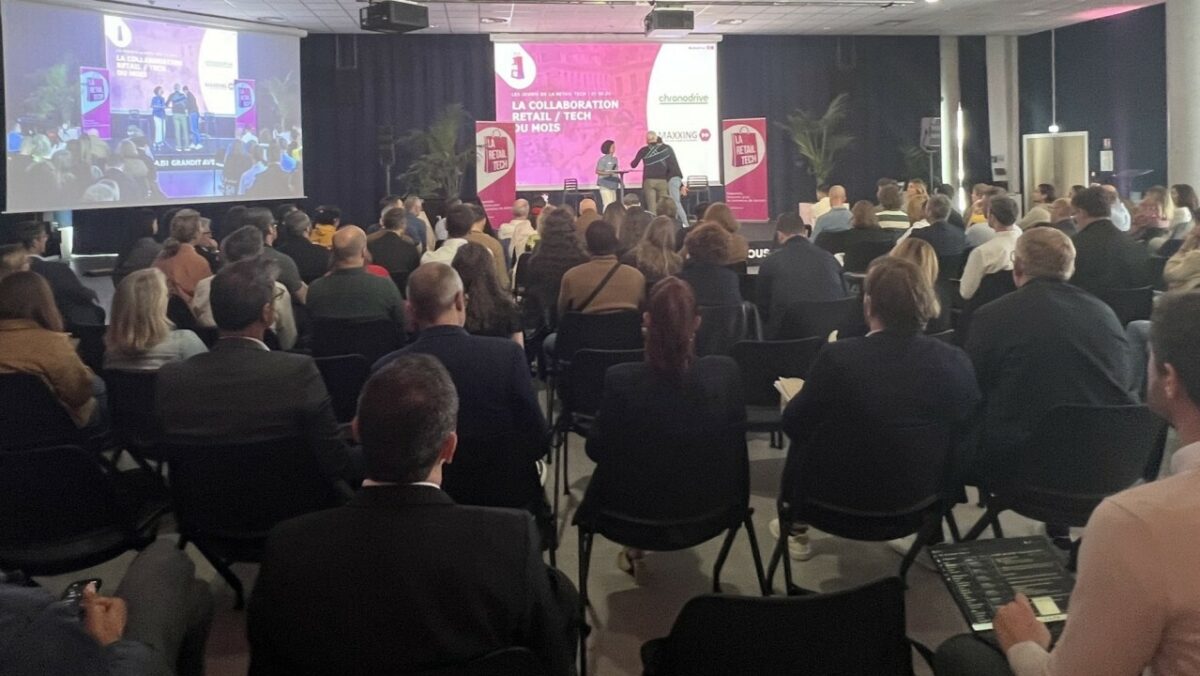
During the Retail Tech Thursdays event, Pierre Delmotte, CRM, Media & Traffic Leader at Chronodrive, and Karine Christophe Malice, Senior Account Executive at Maxxing, discussed the transformation of Chronodrive’s loyalty program and the importance of putting business teams back at the heart of CRM initiatives.
🚗 Chronodrive: A Pioneer in Drive-Thru Services with a Strong Focus on Customer Relations
Founded in 2004, Chronodrive is the pioneer of curbside pickup in France and today generates nearly half a billion euros in revenue from curbside pickup and home delivery combined.
The retailer also has an NPS of over 80, which is particularly high in the food industry.
Pierre Delmotte points out that the brand has long relied on close customer relationships centered on key values:
- simplicity,
- positivity,
- intensity,
- and turmoil.
🛠️ Maxxing: Giving Business Units More Autonomy
Karine Christophe Malice outlined Maxxing’s mission: to enable business teams to manage independently:
- special offers,
- sales promotion,
- personalized offers,
- and loyalty programs.
As she explains:
“The idea behind Maxxing is really to empower the business.”
The partnership with Chronodrive began in late 2023 with a focus on promotions, before quickly evolving into a much more fundamental initiative: customer loyalty.
🎁 Historically strong loyalty… but now difficult to gauge
Chronodrive already had a number of loyalty programs:
- customer gifts,
- fund,
- gift certificates,
- relational care.
But despite this wealth, customers sometimes expressed a lack of understanding.
“Customers would say to us, ‘I don’t understand why I got this reward.'”
Data analyses confirmed this need for simplification and consistency.
🧠 A redesign developed in collaboration with our customers
The overhaul of the loyalty program took nearly a year and included:
- benchmarks,
- internal analyses,
- brainstorming,
- and, above all, several customer focus groups.
Pierre Delmotte emphasizes the importance of this approach:
“Don’t forget to truly put the customer first.”
The teams quickly identified a priority KPI: purchase frequency.
“Frequency was the most significant factor in improving customer loyalty.”

❤️ Chronolovers: A Simple and Scalable Program
This line of thinking led to the creation of the new Chronolovers program.
The goal: to offer a program:
- simple,
- accessible,
- visible,
- and scalable.
Unlike many complex systems, Chronolovers is based solely on the number of orders placed in a quarter.
Pierre Delmotte explains this choice:
“We didn’t want the customer to waste time on a program that was too complex.”
The quarterly reporting cycle also provides greater agility:
“The quarterly schedule allows us to introduce new rewards on a regular basis.”
The program is based on four progressive levels:
- 5 orders,
- 8 orders,
- 10 orders,
- 15 orders.
Each level unlocks cumulative rewards.
🎯 Loyalty as a Relationship
Chronodrive now organizes its CRM strategy around three key areas:
- The promotion: “I attract,”
- The reward: “I build loyalty,”
- Recognition: “I build connections.”
The mobile app, which now accounts for nearly 75% of revenue, plays a central role in this day-to-day relationship with customers.
Through Chronolovers, Chronodrive perfectly illustrates the current evolution of CRM strategies: simpler, more relationship-oriented, and more transparent programs, designed above all to strengthen customer engagement over the long term.

🎙️ Auchan and Kingfisher: Accelerating Omnichannel Transformation in a Retail Sector Under Pressure
During this second roundtable discussion as part of “Retail Tech Thursdays,” Marc Boulangé, Director of Marketing & Digital at Auchan Retail, and Romain Roulleau, Group Digital & E-commerce Director at Kingfisher, shared their perspectives on the major transformations in retail, focusing on omnichannel strategies, e-commerce, retail media, marketplaces, and artificial intelligence.
Two very different groups, but both facing the same challenges: becoming more agile, simplifying the customer journey, and accelerating their digital transformation.
🛒 Auchan: Transforming the Business Model Around Hypermarkets and E-Commerce
Marc Boulangé noted that Auchan is currently undergoing a period of major transformation. For about 18 months, the group has been implementing a sweeping transformation plan in “an environment marked by significant pressure and frequent changes.”
This evolution involves, in particular:
- the conversion of 91 supermarkets into Intermarché franchises,
- a strategic refocus,
- and an acceleration of the omnichannel model.
The goal is now clear: to build a model based primarily on “two pillars: the hypermarket and e-commerce.”
Today, e-commerce accounts for about 8% of Auchan’s revenue, with:
- Drive,
- Click & Collect,
- home delivery,
- as well as partnerships with Deliveroo and, coming soon, Uber Eats.
But beyond revenue, Marc Boulangé emphasizes above all the value created by an omnichannel approach. As he puts it very simply: “A customer who shops only in-store spends 100. When they combine in-store and e-commerce shopping, that figure triples. ” In other words, an omnichannel customer generates nearly 2.8 times more revenue than a customer who shops exclusively in-store.
📱 Mobile Devices at the Heart of New Uses
Auchan is currently working on a complete overhaul of its digital customer journeys to better connect:
- the e-commerce site,
- the app,
- and in-store practices.
Marc Boulangé explains that the teams are “in the process of reworking everything and reviewing all customer journeys in line with this omnichannel vision.”
The app already plays a central role in the group’s digital business, since “in e-commerce, the app accounts for 70 percent of revenue.”
This dominance of mobile shopping can be explained in part by the highly repetitive nature of grocery shopping. Marc Boulangé shares a particularly telling statistic: “The first shopping cart takes about 28 minutes to fill. Once it’s done, people don’t change it much.”
The challenge, therefore, is to:
- simplify usage,
- reduce mental load,
- and save customers time.
🏷️ Promotions: Moving Toward the Phased-Out Use of Paper Flyers
Amid intense pressure on purchasing power, promotions remain a key strategy for Auchan.
But in hypermarkets that can span 10,000 to 15,000 square meters, it can sometimes be difficult for customers to easily spot the best deals.
Marc Boulangé explains that the group is now seeking to better support consumers in order to “help them make the most of the generosity on offer.”
This involves, in particular, a significant acceleration of the digitization of promotional materials.
As a result, Auchan has virtually stopped the mass distribution of paper flyers in favor of a largely digital media mix: “Today, 80% of our communications are digital.”
Artificial intelligence plays a key role here in campaign creation and optimization. Marc Boulangé explains that “AI helps us a lot in scaling our creative assets and achieving near-real-time performance.”
Result:
- significantly reduced production costs,
- and a nearly 20% increase in CTR.
📺 Retail Media: A Revenue Stream That Has Become Strategic
Auchan is also continuing to expand its retail media business, which has become a key pillar of its business model.
Marc Boulangé points out that the group is one of the pioneers in this field and that retail media now represents “a substantial source of revenue, both through direct sales and through partnerships with retailers.”
The company is currently working on:
- further digitize in-store promotions,
- gradually make its data available to manufacturers,
- and develop self-service approaches.
The goal is clear: to make better use of first-party data while increasing audience monetization.
🛠️ Kingfisher: An Omnichannel Vision Designed on a European Scale
For his part, Romain Roulleau presented the digital and omnichannel strategy of Kingfisher, the parent company of, among others:
- Castorama,
- Brico Dépôt,
- B&Q,
- and Screwfix.
The group has a strong international presence with markets that have very different dynamics.
In France:
- Castorama continues its turnaround,
- Brico Dépôt continues to grow,
- and the first franchise stores were recently launched.
📦 The Store at the Heart of E-Commerce
One of the most notable aspects of Kingfisher’s strategy is the deep integration between its stores and its e-commerce platform.
As Romain Roulleau points out, “90% of our e-commerce business is generated from the store.”
The group has even shut down certain dedicated logistics platforms in order to adopt a fully unified model across stores and digital channels.
Today, e-commerce accounts for:
- 21% of revenue,
- with growth still in the double digits.
For Romain Roulleau, this organizational structure is a direct response to changing consumer habits: “Consumers are omnichannel.”
This approach makes it possible, in particular, to:
- to bring inventory closer to customers,
- to speed up processing times,
- and to offer extremely fast services.
At Screwfix in the United Kingdom:
- Click & Collect orders can be ready in a minute,
- and some orders are delivered in 20 minutes via Deliveroo or Uber Eats.
🛒 Marketplace: A Profound Transformation of the Retail Model
The marketplace is now a major strategic pillar for Kingfisher.
The group currently consists of:
- more than 4,000 merchants,
- more than 600 million euros in cumulative GMV,
- and several million SKUs, depending on the retailer.
The marketplace already accounts for:
- more than 50% of B&Q’s e-commerce sales,
- and between 25 and 30 percent at Castorama.
Kingfisher is now accelerating its European strategy with:
- a unified onboarding process,
- a cross-border approach,
- and opening up to Chinese sellers based in Europe.
🤖 Hello Casto: A Pioneer in Conversational AI
Kingfisher had also been a pioneer with Hello Casto, considered one of the first retail chatbots in Europe.
Romain Roulleau acknowledges that taking this risk so early on allowed the group to learn quickly: “We got in very early, and that allowed us to learn a great deal.”
The next step is now to merge:
- the chatbot,
- and the standard search engine, in order to provide a fully unified search experience.
As he explains: “What interests me for the future is unified research.”
The group is placing a strong emphasis on:
- Google,
- agent-based strategies,
- and the gradual integration of AI into all customer journeys.
⚡ AI: The real issue is still choosing the right applications
Finally, the two leaders emphasized a key point: in an environment where technology is evolving extremely rapidly, the real issue is not simply choosing the right AI model.
According to Romain Roulleau, “the most strategic thing is knowing which use cases we’re working on.”
Kingfisher now has a team of 80 people dedicated to AI, guided by a very clear strategy:
- test quickly,
- learn quickly,
- quickly scale up what works,
- and quickly abandon what isn’t working.
Marc Boulangé takes a similar approach and explains that he is “careful not to commit to a single solution.”
One way to store it:
- flexibility,
- to limit technological dependencies,
- and to remain agile in an environment where innovations are now evolving at a very rapid pace.

🌱 Willemse and Positive User: Personalizing Customer Relationships Through Data
During the Retail Tech Thursdays event, Guillaume Baudhuin, CIO of Willemse, and Julien Labouré, Head of Partnerships at Positive Group, shared their insights on marketing personalization and automation in the garden e-commerce sector.
🌿 Willemse: Accelerating Digital Transformation
Founded in 1962, Willemse is a gardening retailer with a presence in four countries and a customer base of approximately 2 million.
After a long history centered on its print catalog, the company recently completed its transition to digital.
As Guillaume Baudhuin explains: “We had a large customer base, but we were managing it in a somewhat one-size-fits-all way.”
The goal, therefore, was to make better use of this customer data while giving the marketing teams more autonomy.

🛠️ A unique tool for customizing learning paths
To support this transformation, Willemse chose Positive User, a marketing automation and personalization platform.
One of the major challenges was to have a tool capable of centralizing:
- email campaigns,
- automation,
- and the personalization of customer journeys.
“One of the challenges was to provide the teams with an all-in-one tool.”
In the world of gardening, personalization is particularly important because behavior is heavily influenced by:
- the seasons,
- the weather,
- regions,
- and customers’ interests.
📩 Real-time personalization and recommendations
One of the first features implemented involves automated welcome packs and personalized recommendations.
Guillaume Baudhuin explains, for example: “We don’t welcome a customer from the Mediterranean or the Netherlands in the same way.”
The recommendations are also adjusted:
- the products viewed,
- for purchases made,
- and browsing behavior.
The goal is to provide long-term support to the client through:
- cross-selling,
- upselling,
- and personalized advice.
“When you buy a plant, you’re embarking on an adventure that can last for several years.”
Activation occurs when:
- directly on the website during checkout,
- and then in post-purchase email sequences.
Julien Labouré also points out a key statistic: “7% of visitors targeted by personalized recommendations generate more than 26% of total revenue.”
🔄 Re-engage customers at the right time
Willemse is also working on RFM segmentation to tailor communications based on:
- purchase frequency,
- the seasons,
- and customer habits.
The goal is not to overwhelm people but to communicate at the most appropriate time.
As Guillaume Baudhuin points out: “What sets us apart at Willemse is that we can support our clients with advice.”
⚡ A Focus on Automation and Simplicity
Finally, both speakers emphasized the importance of simplicity and automation.
According to Julien Labouré:
“It has to be as simple as possible.”
The next phase of the project will focus in particular on:
- refining the segmentations,
- multichannel activation,
- and leveraging social media audiences.
This approach perfectly illustrates the current evolution of CRM: strategies that are more context-driven, more automated, and far more personalized.