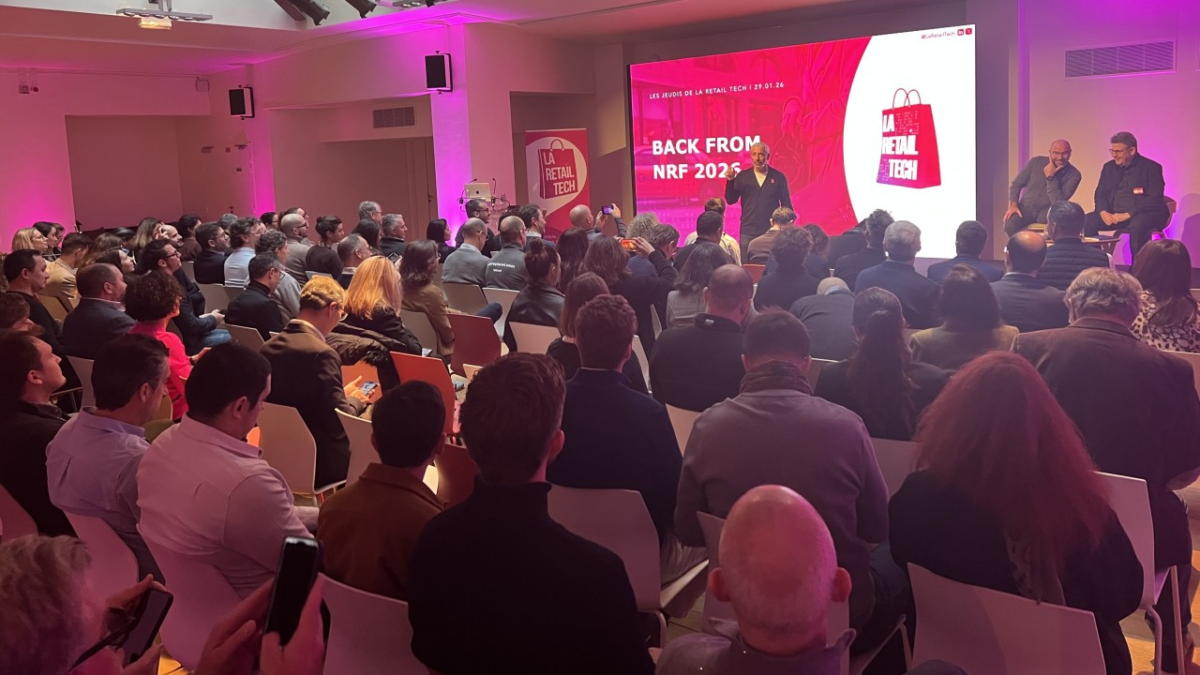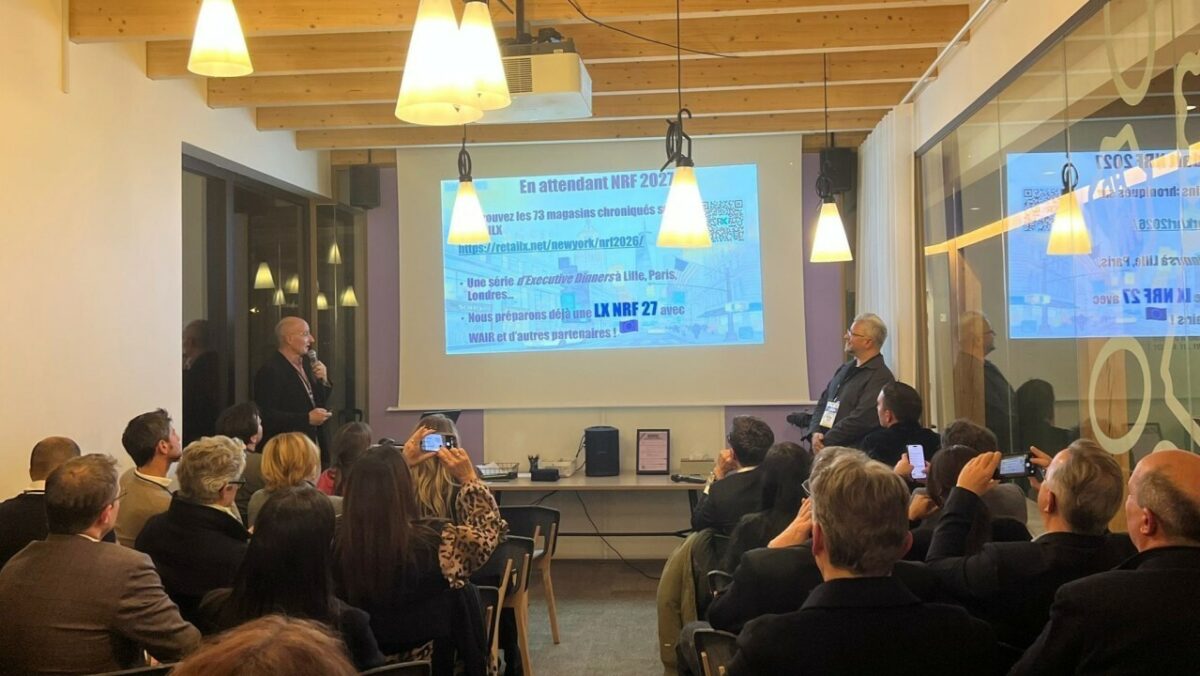
January 2026 marks a turning point for e-commerce and analytics. With the launch of the Universal Commerce Protocol (UCP) at the NRF trade show in New York last week, Google is accelerating the emergence of agentic commerce: AI agents capable of discovering, comparing… and buying products without going through a website.
⚠️ Note: Google is not the first. OpenAI and Microsoft have already paved the way.
👉 What really changes today is scale: Google can industrialize these uses via Search, Gemini, Wallet/Pay and Merchant Center.
🧠 The click is no longer the starting point
For 20 years, our models were based on a simple funnel:
Visitor → Session → Pages → Conversion
With agentic commerce, this model is exploding. The new “funnel” becomes :
Intention → AI agent → API call → Transaction
➡️ A transaction can take place entirely within a conversational interface, via API exchanges between the AI agent and the merchant’s systems.
✅ No page view. No session. No JavaScript. ➡️ Customer-side tracking becomes partially blind.
📉 The session loses its analytical value
If purchased in Gemini or Search AI Mode :
- no Google Analytics or Piano Analytics sessions are created,
- onsite funnels become incomplete,
- measured sales may be underestimated.
🔁 New key indicators to watch :
- qualified conversational intentions,
- successful API calls,
- quality and completeness of product flows,
- ability to respond correctly to AI agent requests.
👉 Performance moves from the site to the data exposed to agents.
🧱 Server-side becomes the norm
In a “checkout in conversation” world, the source of truth becomes the back office.
To measure sales correctly :
- server-side tracking becomes indispensable,
- Google Analytics (Measurement Protocol) and Piano Analytics (API server-side) must be fed directly from OMS.
🔐 Consent Mode, privacy and RGPD
With :
- partially off-site routes,
- machine-to-machine API exchanges,
- the gradual disappearance of third-party cookies,
👉 consent becomes a central technical signal.
Key implications:
- server-side events are based on explicit, traceable consent,
- analytics is evolving towards a more privacy-by-design model, aligned with RGPD.
🧬Identity Linking: attribution becomes deterministic
WithIdentity Linking:
- the identity (e.g. Google account) can be securely linked to the merchant account,
- with consent, at the time of purchase,
- and cross-surface continuity (Search, Gemini, Wallet).
📌 Result:
- more deterministic attribution,
- ability to link an AI conversation to a real transaction,
- ROAS calculated on the basis of the prompt, not the click.
🎯 The prompt becomes a touchpoint
OpenAI and Microsoft have shown that buying “in conversation” works. Google can now go to scale.
In this context :
- the prompt becomes a marketing contact point,
- conversation becomes a new funnel,
- the website is no longer the only option.
🛠️ What analytics teams need to do now
At Optimal Ways, we can already see the roadmap to 2026 taking shape:
✅ Hybrid tracking: client-side + server-side
✅ Increased maturity of product flows(Merchant Center = strategic asset)
✅ Multi-source reconciliation(Google Analytics, Piano Analytics, OMS, platforms, data warehouse, …)
✅ Redefining KPIs: less navigation, more intent and transaction
🧩 In conclusion
OpenAI and Microsoft have shown the way. Google is making it massive.
For Digital Analytics :
- the website is no longer the only place for conversion,
- the measurement relies more on the server-side, the actual transaction and theconsented identity.
We will continue our ongoing monitoring of this topic. Stay tuned for future editions of our Optimal Insights newsletter!